When Google shipped Nano Banana earlier this year, most people assumed the funny name marked the finish line. It did not. Interface breadcrumbs spotted inside Gemini now point at a successor that the community has taken to calling Nano Banana 2, with the internal codename GEMPIX2 attached. Nothing about it is official yet, but the pattern matches how Google introduced the first version, so it is worth understanding what a second act would actually change.

What Nano Banana was in the first place
Nano Banana is the marketing name for Gemini 2.5 Flash Image, the image model living inside Google's multimodal stack. Its party trick was never raw generation alone. It let you blend photos, keep a character looking like the same person across edits, and restyle images by simply describing what you wanted. For creators, that collapsed a lot of the distance between an idea and a usable asset: no long Photoshop sessions, no re-shooting, just conversation.
The clues pointing to a second version
The most concrete signal so far is an announcement card that surfaced in the Gemini web interface, referencing an upcoming update to Google's image generation features alongside that GEMPIX2 codename. Read on its own, it is a pre-release teaser. Read against Google's history of quietly staging image model rollouts, it looks less like a rumor and more like a countdown.
What the upgrade will likely bring
Sharper output, quicker turns
Previews suggest the follow-up moves exports into true 4K territory while cutting render times. That combination matters more than either number alone: assets stop needing an upscaling detour before they touch a video timeline or a print layout. Expect output presets for the usual destinations, social, web, print and video frames, baked into the pipeline.
Speed is the other half of the story. Early tests reportedly complete complex prompts in under ten seconds, which turns casual A/B exploration into something you can actually do inside a single working session, on a phone included.
Edits that respect the rest of the frame
The first model was praised for keeping characters recognizable between edits. The next one is expected to push that down to the object level, following instructions like swapping a jacket while holding its texture and the scene's lighting constant. The gap between conversational prompts and pixel-level control keeps shrinking.
Fusing many images into one coherent family
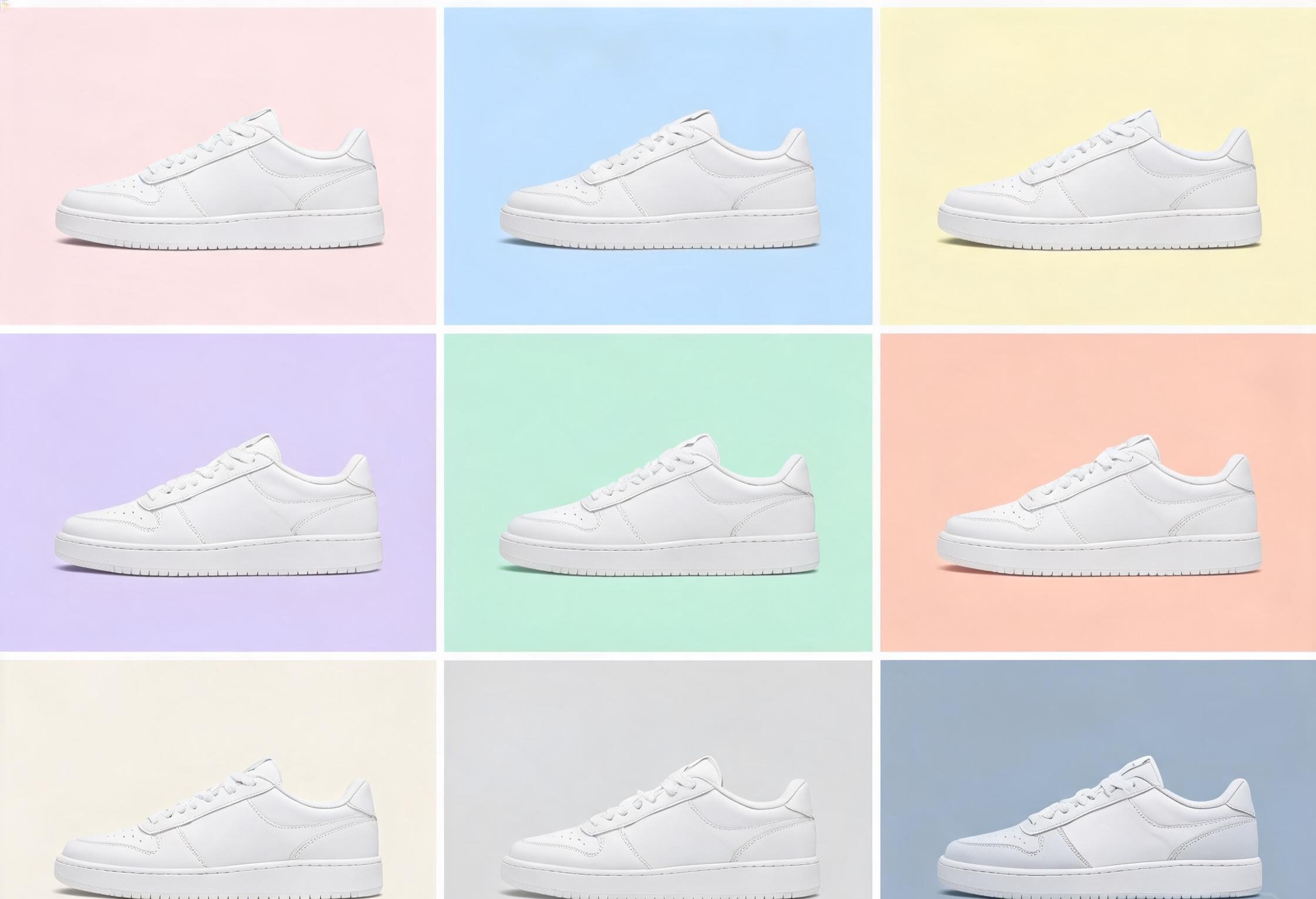
Multi-image blending existed before; the upgrade aims to make composites richer and style transfer more deterministic. That last word is the quiet headline. If variations reliably feel like members of the same visual family, series work, thumbnails, episodic art and catalog shoots become far less of a slot machine. There are also hints at better frame-to-frame consistency, groundwork for whatever Google does next on the video side.
Provenance you can audit
Google already stamps its generated images with an invisible SynthID watermark. The expectation is that GEMPIX2 tightens this: export metadata, provenance tags, optional visible or invisible marks. Less glamorous than resolution numbers, but rights managers and platforms will care about it more.
Smaller items rounding out the list: better color and lighting inference so edits keep the original photo's mood, stronger on-device privacy controls when editing pictures of people, and wider API access for developers who want to build on top of it.
Under the hood
The chatter describes a move from a flash-tier image model toward something called Gemini 3 Pro Image, a unified image-text-vision architecture rather than a generator bolted onto a text model. Four characteristics define it:
A multimodal transformer backbone that reasons about images the way language models reason about text, tracking scene elements and instructions across edits.
Specialized encoder and decoder submodules, with the decoder handling pixel-level fidelity and the encoder aligning multiple input images efficiently.
A latent compression plus upscaling pipeline, so 4K output does not require decoding at full resolution from the start. Interactivity survives the resolution bump.
A provenance layer embedding imperceptible signatures for verification, building on what the current model already does.
Compared with the first version, the differences are architectural, not cosmetic: finer vision-language alignment, native high-resolution decoders, sparse compute paths that spend processing where the image needs it, and serving tuned for Google's accelerator fleet so latency stays low at consumer scale.
Why it matters beyond the hype
For everyday users, faster iteration changes the creative loop itself. You stop hunting for one perfect take and start generating dozens of consistent variants, which is a different activity entirely. Production-grade output at 4K also quietly relocates work that used to need a studio: small teams and solo creators can prototype what previously required a shoot.
For agencies, the interesting promise is continuity at campaign scale, one model managing the same character or product across dozens of hero images, with generative assets flowing into the same asset managers, version control and rights pipelines as everything else. That only works if the toolchain hooks exist, which is exactly what the provenance and API moves suggest.
The honest caveats
None of this is guaranteed. Higher fidelity cuts both ways: deepfake risk grows, and deterrents like provenance metadata and rate limits become load-bearing rather than nice-to-have. Models still hallucinate plausible-looking text inside images, and character consistency across many sources still fails in edge cases that production teams will notice. Open business questions remain too, free tier versus Pro pricing, and how cleanly assets export with their metadata outside Google's ecosystem.
Quick answers
Is Nano Banana 2 confirmed?
Not formally. The evidence is a UI announcement card and a codename, consistent with how the first release was staged. Treat feature specifics as informed expectation, not fact.
What is GEMPIX2 in one line?
A rumored second-generation Gemini image model: 4K output, sub-ten-second edits, stronger consistency, multi-image fusion, and built-in provenance.
Should I wait for it before building workflows on the current model?
No. The current Nano Banana already handles commercial work, and the upgrade path points toward more of the same capabilities, sharper and faster, rather than a different tool.
