As the annual trendsetter of the global communication industry, the opening of this year's Barcelona MWC 2026 will be explosive! Over 2000 companies compete on the same stage. Rocket, the most eye-catching person in the audience, is undoubtedly the Atlas 950 AI super node released by Huawei and the supporting 6G prototype base station.
This time, the industry is no longer just a pie in the sky, but has directly set the core theme of the communication industry for the next decade: AI native 6G, which fully integrates connectivity and intelligence.
How disruptive is Huawei's big move this time?
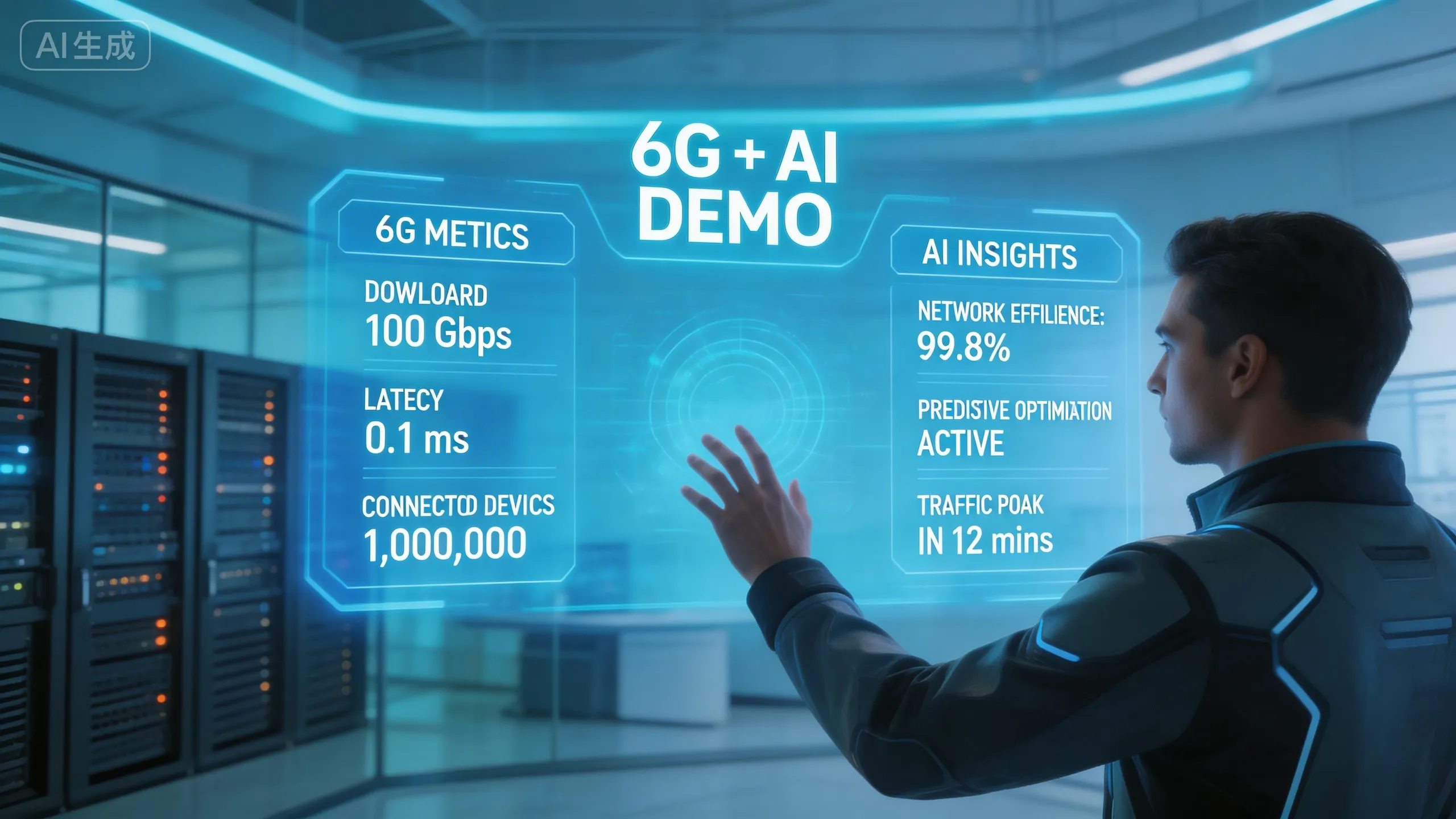
The Atlas 950 AI supernode directly embeds the real-time training and end-to-end inference capabilities of a billion parameter large model into the core architecture of communication networks. In plain terms, the previous base stations were just "water pipes for transmitting data", while the future 6G base stations themselves are distributed edge computing nodes with built-in super brains.
The 6G prototype base station, which debuted at the same time, has a peak transmission rate of over 10Tbps per base station, which is 50 times higher than the peak of current 5G commercial networks. More importantly, through AI native optimization of the entire process, network end-to-end latency and operational energy consumption have been reduced by over 60% compared to 5G, while speed has increased by dozens of times and energy consumption has been significantly reduced, truly achieving a dual breakthrough in performance and efficiency.
Many people may ask, what is the difference between 5G+AI, which has been called for many years, and the current integration of 6G and AI?
The core difference lies in the stark difference between "cheating" and "native".
Previously, everyone roast that 5G "perception is not strong", the essence of which is that communication and AI are always two skins: the network only transmits data, and AI computing power is concentrated on the remote cloud, and the one-time delay makes many high demand scenarios impossible to land.
At this year's MWC, the entire industry has reached a high consensus that AI is the underlying soul of 6G, rather than an additional function. From network planning, construction, operation and maintenance, to channel scheduling, resource allocation, and data computing, the entire process is driven by AI native, completely bidding farewell to the simple superposition of "communication+AI" and achieving true integrated integration.
Not only Huawei, but also the global industrial chain is fully committed to this track. NVIDIA, in collaboration with top global operators such as Vodafone and AT&T, has launched a 6G AI native platform initiative. Ericsson and Nokia have simultaneously launched 6G solutions adapted to this architecture, and terminal manufacturers have also showcased AI native terminals that support end-to-end cloud computing collaboration. The pace of the entire industry is currently consistent.
More importantly, this technological revolution is closely related to each and every one of us.
It has completely rewritten the upper limit of the "Internet of Everything": the all truth universe immersive interaction without Carton, the remote precision surgery with millisecond response, the automatic driving of the whole scene, the full link intelligent industrial Internet, and even the smart home we use in daily life will be upgraded from "passive networked remote control" to "actively adapted intelligent Internet of Everything".
The current global 6G standard development has entered a critical window period. The technological explosion at MWC 2026 not only shows us the future of the communication industry, but also the core discourse power of Chinese enterprises in the next generation of communication technology.