Driven by the global demand for health consultation, which exceeds 230 million times per week, OpenAI has officially launched ChatGPT Health, an independent health service product. This AI agent, which focuses on personal health management, not only integrates multiple data sources such as electronic medical records, Apple Health, and MyFitnessPal, but also possesses comprehensive capabilities such as interpreting physical examination reports, generating checklists for medical issues, customizing diet and exercise plans, and even purchasing healthy ingredients with one click through Instacart. This move marks a crucial step in OpenAI's strategic transformation from a general AI assistant to providing intelligent services in vertical fields.

The core innovation of ChatGPT Health lies in the establishment of a comprehensive health data integration system. By integrating with b.well, the largest medical data platform in the United States, the service achieves seamless docking with electronic medical record systems. Users can authorize connections to multiple information sources such as Apple Health, Peloton exercise data, MyFitnessPal diet records, and GLP-1 drug usage records.
This data fusion capability enables users to conduct intelligent cross-platform queries, such as asking "What is the trend of my recent cholesterol levels?" or "What are the key questions I should ask the cardiologist tomorrow?" Based on historical data and current conditions, the system generates personalized health insights and actionable recommendations, completely addressing the pain points of data dispersion and difficulty in reuse in traditional health management.
To ensure the reliability of medical advice, OpenAI collaborated with over 260 practicing doctors from 60 countries in the development process, providing more than 600,000 professional feedbacks in total. These medical experts specifically trained the AI system to identify high-risk symptoms, such as precursors to myocardial infarction, which can trigger prompt medical advice.
The system has been specially tuned to avoid an overdiagnosis tendency, enabling it to accurately distinguish between scenarios that "require observation" and those that "require emergency treatment". In terms of expression, ChatGPT Health uses colloquial language to explain complex medical terminology, lowering the barrier for ordinary users to understand.
In terms of privacy protection, all health interactions operate within an independent encrypted space, completely isolated from regular chat functions. OpenAI has made a clear commitment that users' health data will never be used for model training, ensuring the security of sensitive information from a technical architecture perspective.
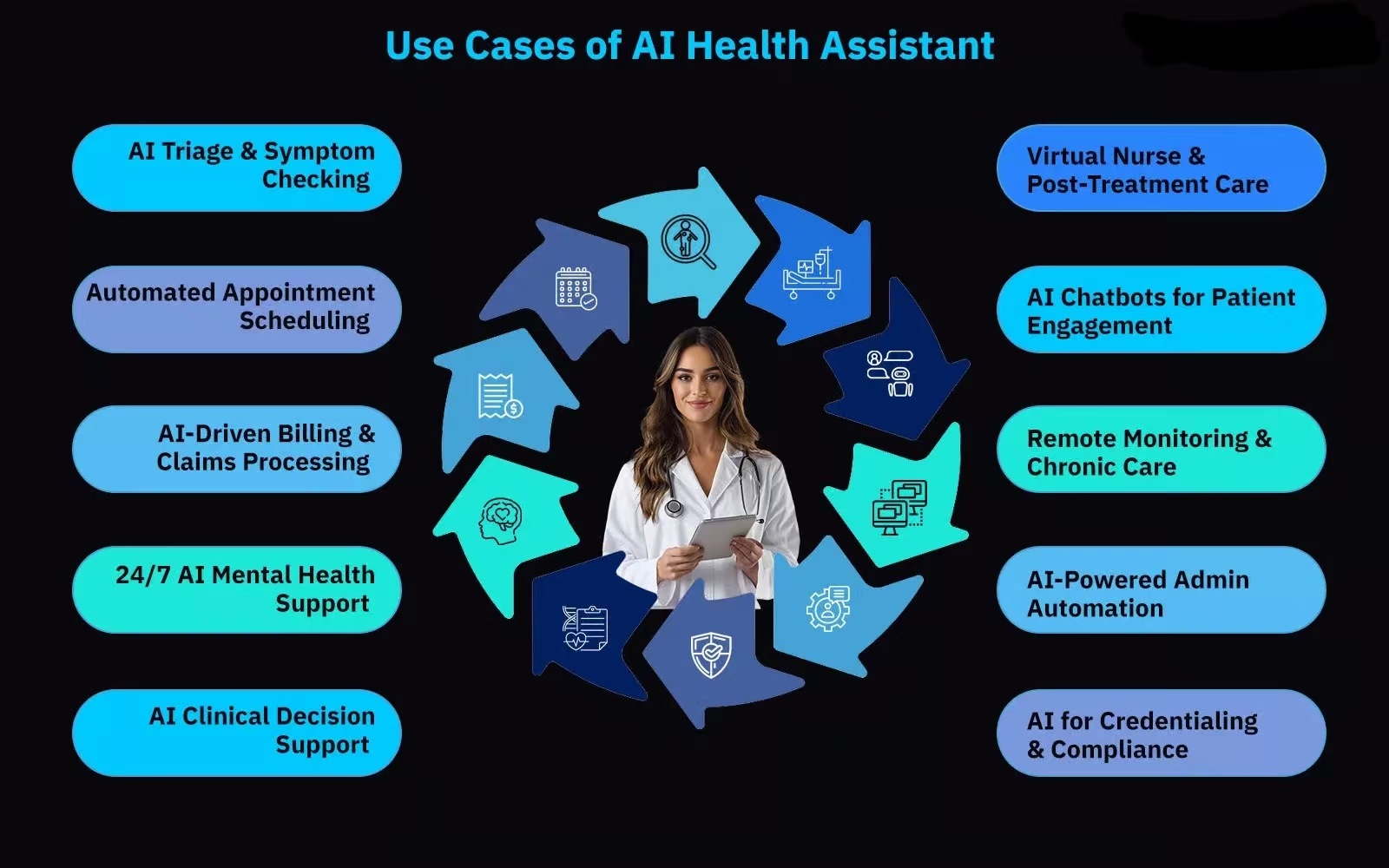
The functional scope of ChatGPT Health far exceeds that of traditional health Q&A applications. In the preparation phase for medical treatment, the system automatically generates a personalized list of questions based on the user's medical history, helping patients obtain the most valuable information within the limited diagnosis and treatment time. The insurance comparison function analyzes the coverage and cost-effectiveness of different insurance plans, assisting users in making informed decisions.
Lifestyle intervention is another highlight of this service. For postpartum recovery needs, the system will recommend suitable courses on the Peloton platform. For users who are taking GLP-1 weight loss drugs and want to build muscle, AI will generate a high-protein diet plan and automatically create an Instacart shopping list, achieving a closed loop from suggestion to execution. The system can also condense complex medical orders into a clear action item list, reducing the difficulty of executing medical instructions.
OpenAI has simultaneously launched the HealthBench evaluation framework, which conducts doctor-standard quantitative assessments of AI performance from three dimensions: safety, interpretability, and accuracy of referral suggestions, ensuring continuous improvement in service quality.
Fidji Simo, CEO of OpenAI's Applied Business, herself suffers from orthostatic tachycardia syndrome and endometriosis. She shared a personal experience: when she was hospitalized for kidney stones last year, the doctor prescribed a conventional antibiotic, but after analyzing the uploaded complete medical history, ChatGPT pointed out that the drug might trigger the risk of recurrence of previous severe infections.
After identifying this potential danger, the resident physician urgently adjusted the medication regimen and admitted, "During ward rounds, we only have 5 minutes per patient, and the medical record system simply cannot deeply explore such hidden risks." This case exemplifies the unique advantages of AI in information integration and risk warning, especially in the realistic environment where medical resources are scarce and doctors' time is limited.
Despite OpenAI CEO Sam Altman's repeated public statements that "AI's diagnostic capabilities have surpassed those of most doctors," he still emphasizes a key principle: "I don't want to completely entrust the fate of healthcare to ChatGPT without human involvement.". "
This contradictory stance actually reveals the essential boundaries of AI healthcare - artificial intelligence can serve as a super assistant to enhance efficiency and compensate for information blind spots, but it cannot replace the trust relationship, empathy, and complex ethical judgments between doctors and patients. The balance between technological empowerment and humanistic care will be a core issue that AI health services will face in the long run.
From Ant Group's "Afu" reaching over 15 million monthly active users to OpenAI's significant investment in the health sector, AI healthcare is transitioning from a tool-like application for "registration and consultation" to an intelligent service for "active management throughout the entire life cycle".
The real challenge for ChatGPT Health in the future lies not in the technology itself, but in three key issues: first, whether it can establish user trust between convenience and reliability; second, whether it can overcome geographical constraints and data barriers (currently, medical record access is limited to the US market); third, whether it can achieve large-scale replication within a strict regulatory framework.
For global users, an "AI health manager" that can interpret all health data, possesses medical knowledge, proactively reminds and cares, and strictly adheres to privacy boundaries may arrive sooner than imagined. However, it must be remembered that it will always be an assistant to doctors, not a substitute. Human-machine collaboration, each playing to its strengths, is the correct approach to AI healthcare.